
Volatility & Valuations - Has Fine Wine’s Moment Arrived?
Volatility in Traditional Markets
Global markets have become increasingly volatile, shaped by geopolitical tension, persistent inflationary pressures and shifting central-bank policy expectations. Investor sentiment has grown fragile, with markets reacting abruptly to signals and triggering sharp, often short-lived swings. In April 2025, US tariff announcements wiped nearly $6.6 trillion from US market value over two days before rebounding slightly.
While most major asset classes delivered positive returns in 2025, performance has been accompanied by caution rather than confidence. Markets have become harder to navigate, and the reliability of traditional asset classes is increasingly being called into question. Against this backdrop, fine wine quietly stands out as a differentiated and timely option.
Where to Invest: Equities?
Equities were long supported by decades of falling interest rates, disinflation and globalisation, but those tailwinds have now faded. Particularly in the US, markets have become increasingly concentrated, with a disproportionate share of performance driven by a narrow group of large-cap technology names. The top ten companies now account for over 40% of the S&P 500.
While expectations around AI-led productivity gains have fuelled recent rallies, reliance on the small number of tech stocks at the top of the index has increased downside risk. As valuations stretch, concerns are growing that a bubble is emerging, eroding the reliability of equities as a dependable asset class.
Where to Invest: Gold?
Gold has traditionally been valued for its low correlation with equities and its role as an inflation hedge, reinforced by central banks in recent years as they have increased reserves to reduce exposure to vulnerable currencies.
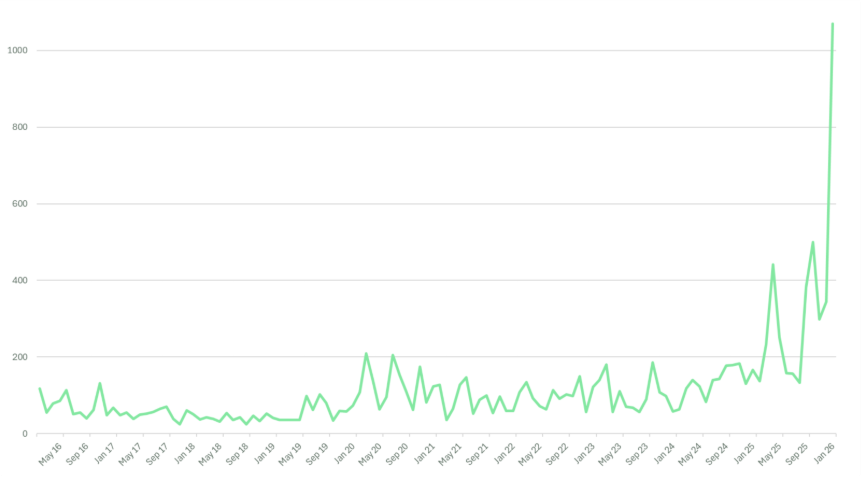
Since 2022, however, gold prices have risen alongside rising real interest rates. Gold reached all-time highs in January, climbing above $5500 an ounce, before reversing sharply later in the month; on 29th January, gold fell 9% in a single day, marking its largest one-day decline since 1983.
Increasingly, traditional safe-haven assets are exhibiting the volatility associated with risk assets. So where can investors look now for diversified exposure without this increasingly systemic volatility?
A Case for The Fine-Wine Market
The fine wine market has historically shown near zero correlation with equity markets (c. 0.1). Prices are primarily driven by intrinsic scarcity rather than macroeconomic cycles or policy shifts. Over long holding periods, this translates to steady value appreciation with comparatively low volatility, as prices tend to adjust gradually rather than react abruptly to short-term shocks.
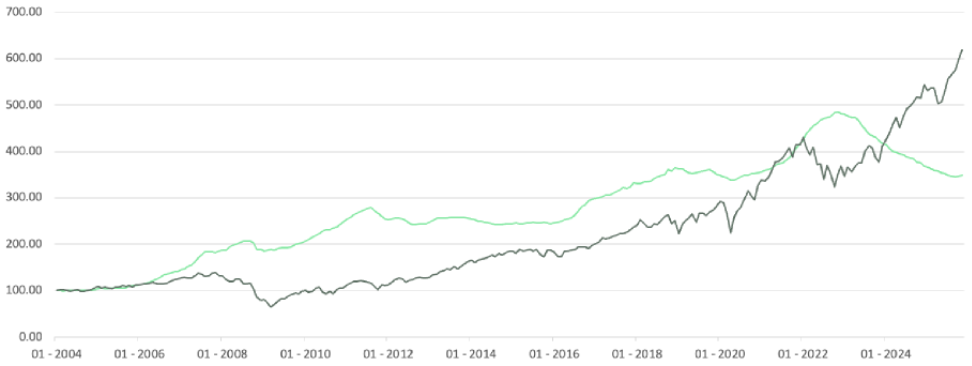
What’s more, the market has just come out of a three-year correction. Following a period of exceptional growth during 2020 and 2021, prices adjusted from 2022 as speculative demand receded and buyers became more selective. The result has been a meaningful reset in valuations at a time when traditional asset classes appear overvalued and volatile. Prices have since stabilised, with major Liv-ex indices trending upwards since September 2025. Spreads are beginning to tighten, though they remain relatively wide - recent bid-offer ratios for the Liv-ex 1000 index sat at 0.70, down from a high of over 6 in 2022. With the market still in the early stages of recovery, entry points for investors remain highly attractive.
Conclusion
In an environment defined by uncertainty, traditional diversification tools are under growing strain. Against this backdrop, fine wine offers a differentiated role; its low correlation to equities, historically low volatility and long-term performance provide a rare source of stability at a time when predictability across asset classes has diminished. Having already undergone a three-year reset, fine wine represents a compelling and timely alternative for capital preservation.
Disclaimer: This report is provided for informational purposes only and does not constitute investment advice, a recommendation, or an offer to buy or sell any financial instrument or asset. The views expressed are based on information believed to be reliable at the time of publication but are subject to change without notice. Past performance is not a reliable indicator of future results.
